
How to Verify Your Identity for IRS Letter 4883C
If you received IRS Letter 4883C, you must complete an identity verification process with the Internal Revenue Service before your tax return can be processed. This verification confirms that you are the rightful taxpayer who filed the return in question.
Why the IRS Sent Letter 4883C
The IRS sends Letter 4883C when it needs to verify a taxpayer’s identity before continuing to process a tax return. This happens when the IRS cannot confidently confirm that the return was filed by the correct individual and wants to prevent possible identity theft or fraudulent refunds.
What Is IRS Letter 4883C
IRS Letter 4883C is an official notice sent by the Internal Revenue Service when additional identity verification is required before a tax return can be processed.
IRS Letter 4883C: What It Means and How to Respond
If you received IRS Letter 4883C, the Internal Revenue Service is asking you to verify your identity before continuing to process your tax return. This letter is sent as a protective measure when the IRS cannot confidently confirm that a return was filed by the rightful taxpayer.
IRS Letter 4883C. Potential Identity Theft During Original Processing
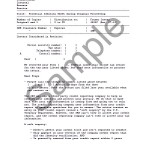
IRS Letter 4883C is an official notice sent by the Internal Revenue Service to request identity verification from a taxpayer before continuing the processing of a tax return.
Amending or correcting Form 709
An amended Form 709 is used to correct errors, omissions, or changes related to a previously filed gift tax return. The amended return replaces or supplements the original filing and updates the donor’s lifetime gift and generation-skipping transfer tax records.
What happens after filing Form 709
After Form 709 is filed, the Internal Revenue Service uses the information reported on the return to update the donor’s lifetime gift tax and generation-skipping transfer tax records.
Gifts made to trusts on Form 709
Gifts made to trusts are commonly required to be reported on Form 709 because they often involve future interests or require classification under gift tax and generation-skipping transfer tax rules.
Gifts of digital assets on Form 709
Form 709 must be used to report gifts of digital assets when those transfers meet the criteria for gift tax or generation-skipping transfer tax reporting.
Gift splitting between spouses on Form 709
Gift splitting allows spouses to treat gifts made to third parties during a calendar year as if one-half were made by each spouse. When this election is used, Form 709 must be filed to document the election and report each spouse’s share of the gifts, even if no gift tax is due.