Texas

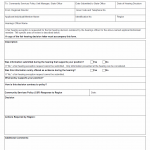
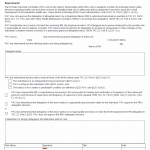
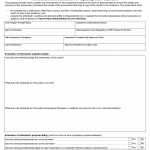
TX HHS Form 1591. Provider Advocate Committee (PAC) Acting as the Client's Responsible Adult

TX HHS Form 1591. Provider Advocate Committee (PAC) Acting as the Client's Responsible Adult

The TX HHS Form 1591, Provider Advocate Committee (PAC) Acting as the Client's Responsible Adult, is a crucial document that helps solve the problem of ensuring the health care decisions of individuals who cannot make their own choices. In situations where an individual lacks capacity to make decisions regarding their health care and does not have a willing and able adult to participate in decision-making, the PAC acts as the responsible adult (CRA) to approve or deny delegation of tasks by registered nurses (RNs) to unlicensed personnel.

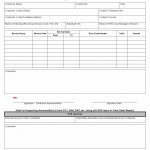
TX HHS Form 1593. Nursing Services Checklist

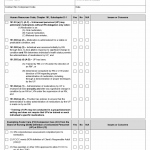
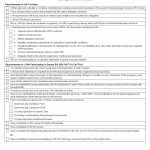
TX HHS Form 1593. Nursing Services Checklist

The TX HHS Form 1593, Nursing Services Checklist, is a crucial tool for healthcare providers to ensure they meet the requirements for nursing services in various settings. This form helps solve the problem of ensuring that all necessary steps are taken to provide high-quality care to patients. It is typically used by registered nurses (RNs) and licensed vocational nurses (LVNs) who need to document their compliance with Texas Health and Human Services (HHS) regulations.

TX HHS Form 1594. Individualized Skills Assessment for Regulating Water Temperature

TX HHS Form 1594. Individualized Skills Assessment for Regulating Water Temperature

Form 1594 is a safety-focused assessment document used within the Home and Community-based Services (HCS) program in Texas. The form is designed to evaluate whether an individual living in an HCS residence can safely regulate hot and cold water during bathing or handwashing without assistance. Its purpose is to prevent scalding injuries and ensure appropriate supports are in place when independent temperature control is not safe.

Tags: 

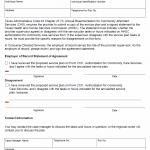
TX HHS Form 1596. Consumer Directed Services Agreement for Community Attendant Services Annual Reauthorization

TX HHS Form 1596. Consumer Directed Services Agreement for Community Attendant Services Annual Reauthorization

The TX HHS Form 1596, Consumer Directed Services Agreement for Community Attendant Services Annual Reauthorization, is a crucial document that helps resolve issues related to community care services. This form is used in situations where the provider supervisor disagrees with the service plan tasks or hours indicated on the HHSC authorization form.

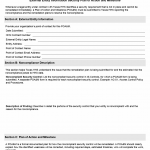
TX HHS Form 0021. External Entity Information Security Plan of Action and Milestone

TX HHS Form 0021. External Entity Information Security Plan of Action and Milestone

The TX HHS Form 0021: External Entity Information Security Plan of Action and Milestone is a crucial document that helps external entities under contract with Texas Health and Human Services (HHS) identify and remediate security requirements that are not in place. This form is used whenever an entity identifies a security requirement that cannot be immediately remediated, requiring the submission of a plan to resolve the noncompliance.

TX HHS Form 0065. Information Regarding Authorized Electronic Monitoring for Nursing Facilities

TX HHS Form 0065. Information Regarding Authorized Electronic Monitoring for Nursing Facilities

The TX HHS Form 0065, "Information Regarding Authorized Electronic Monitoring for Nursing Facilities," is a crucial document that enables residents or their legal representatives to request authorized electronic monitoring (AEM) in nursing facilities. This form helps solve the problem of ensuring resident autonomy while maintaining facility safety and security.

TX HHS Form 0066. Request for Authorized Electronic Monitoring

TX HHS Form 0066. Request for Authorized Electronic Monitoring

The “Request for Authorized Electronic Monitoring” form is a short but legally significant document used in Texas long-term care facilities. It allows a resident—or a legal representative acting on their behalf—to formally authorize the use of an electronic monitoring device, such as a video camera, inside the resident’s room. Although the form looks simple, it triggers specific rights and obligations under Texas Health and Safety Code Chapters 242 and 247.