
TX HHS Form 3111. End-Stage Renal Disease Evaluation
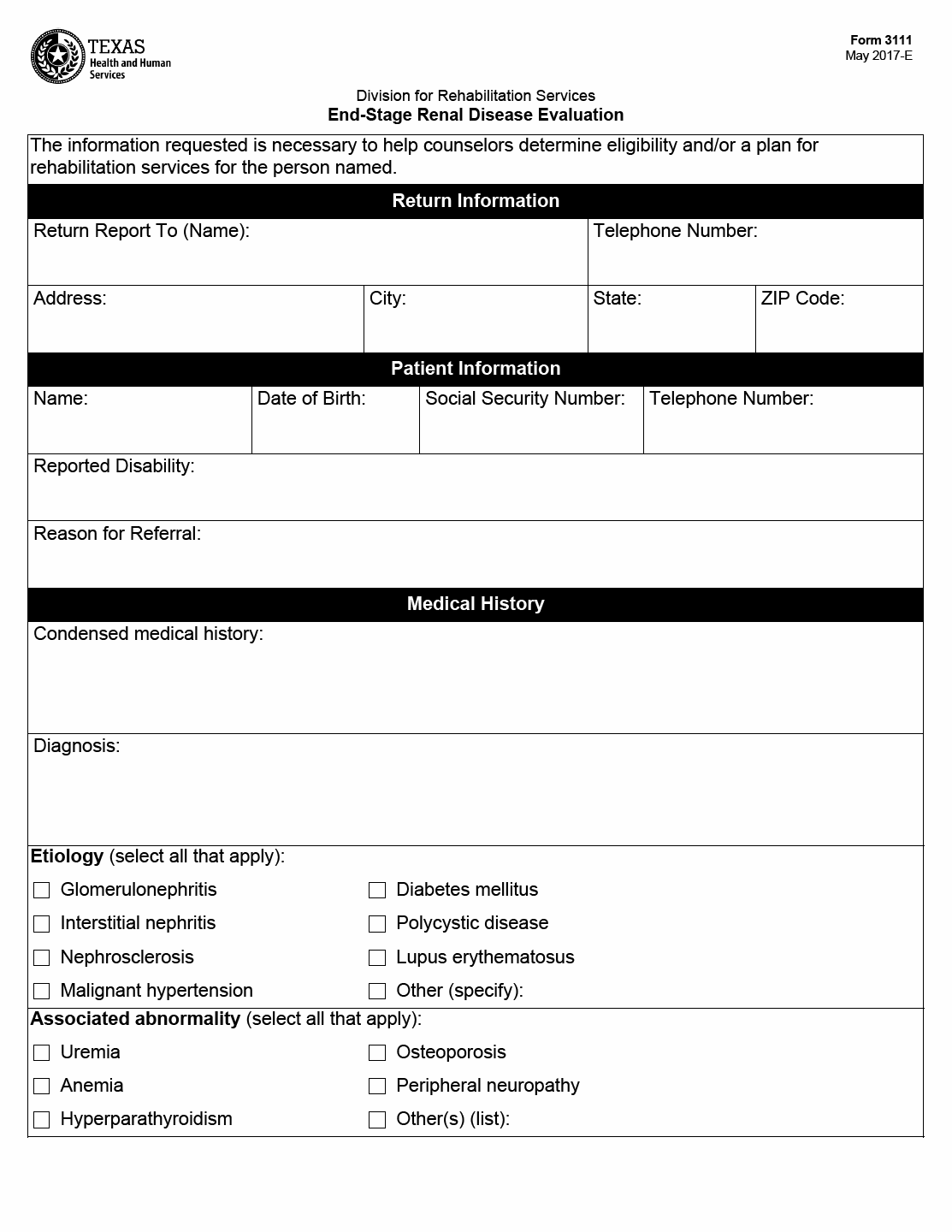
The TX HHS Form 3111, End-Stage Renal Disease Evaluation, is a crucial tool for determining eligibility and developing rehabilitation plans for individuals with end-stage renal disease. This form helps solve the problem of identifying suitable services for patients with this condition, allowing healthcare professionals to provide targeted support.
This evaluation form requires essential information about the patient, including date of birth, social security number, reported disability, reason for referral, and condensed medical history. The latter includes details on etiology (such as glomerulonephritis or diabetes mellitus) and associated abnormalities (like uremia or osteoporosis). This comprehensive approach enables healthcare professionals to develop a personalized plan for rehabilitation services.
The form is typically filled out by healthcare professionals, such as counselors or medical specialists, who are working with patients diagnosed with end-stage renal disease. By completing this evaluation, they can ensure that the patient receives the necessary support and resources to manage their condition effectively. Key points to note include:
- The form is used for determining eligibility and developing rehabilitation plans for individuals with end-stage renal disease.
- It requires essential information about the patient's medical history, disability, and reason for referral.
- Healthcare professionals typically fill out this form to provide targeted support for patients with end-stage renal disease.