
TX HHS Form H3038. Emergency Medical Services Certification
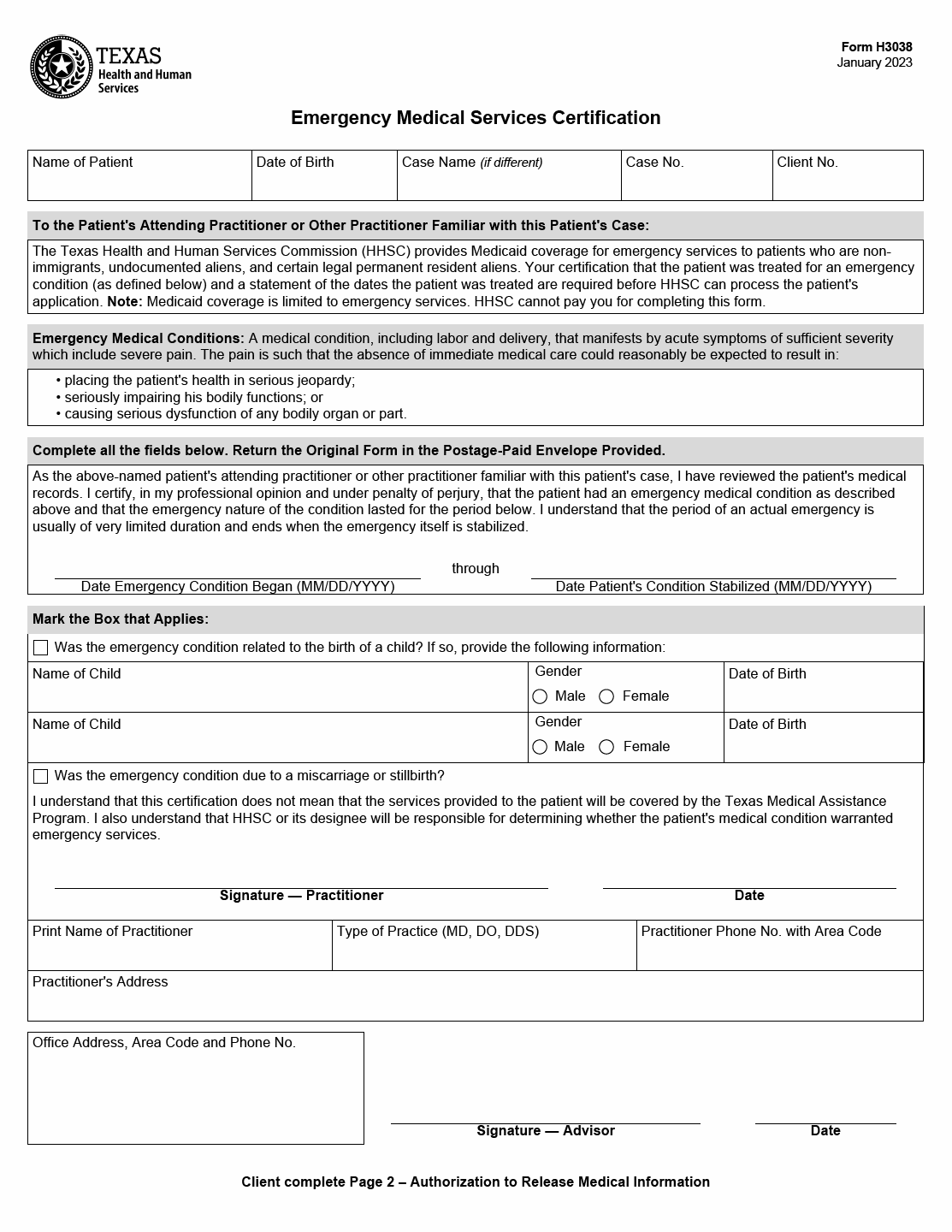
Form H3038, issued by the Texas Health and Human Services Commission (HHSC), is used to certify that a patient received emergency medical services. This form is primarily required for Medicaid eligibility determination for non-immigrants, undocumented individuals, and certain legal permanent residents. It ensures that HHSC can verify that the patient’s medical condition qualified as an emergency before processing coverage.
Purpose and Overview of the Form
The form serves two main purposes: (1) to authorize the release of medical information to HHSC, and (2) to certify that the patient experienced an emergency medical condition. Only services classified as emergency care are considered for Medicaid coverage under this process.
Key objectives include verifying the medical necessity of emergency services, documenting treatment dates, and confirming that the patient’s condition met the statutory definition of an emergency.
Explanation of Key Sections
Section I – Patient Information
This section captures the patient’s personal information, including name, date of birth, case number, and client number. Accurate completion ensures that HHSC can match records to the correct applicant.
- Common mistakes: entering incomplete dates, mismatched case numbers, or incorrect patient identifiers.
- Who should fill this: the patient or an authorized personal representative.
Section II – Authorization to Release Medical Information
By signing this section, the patient or authorized representative permits HHSC to contact the patient’s healthcare providers for copies of medical records. This is crucial for verifying eligibility.
- Ensure the expiration date is accurate.
- If signing on behalf of the patient, clearly describe your authority.
- If unable to sign, two witnesses must attest to the mark.
Section III – Notice to Patient
This section informs the patient about privacy protections and their rights under federal and state regulations. Patients are reminded that information released may no longer be protected once shared with third parties.
Practitioner Certification Section
Practitioners must certify that the patient experienced an emergency medical condition, including the period of treatment. Specific details, such as the onset and stabilization dates, must be accurately recorded.
- Mark if the emergency relates to childbirth, miscarriage, or stillbirth.
- Provide the name, gender, and date of birth for any child involved.
- Include signature, printed name, type of practice, and contact information.
Common errors: omitting dates, leaving emergency type unspecified, or incomplete practitioner information.
When to Submit the Form
Submission is required whenever a patient seeks Medicaid coverage for emergency services as defined by HHSC. The form should be completed promptly by the treating practitioner and returned in the provided postage-paid envelope.
It is not required for non-emergency services or routine medical treatment.
Required Supporting Documents
- Medical records documenting the emergency condition.
- Proof of patient identity.
- Authorization signature from the patient or personal representative.
Practical Tips for Completion
- Double-check all dates and patient identifiers to avoid processing delays.
- Ensure all sections are filled completely, including practitioner details.
- Attach relevant supporting medical documents in the order requested.
- Keep copies of all submitted forms for your records.
Examples of Real-Life Situations
- A non-resident patient visits an emergency department for severe abdominal pain; the hospital completes Form H3038 to certify emergency treatment.
- An undocumented immigrant experiences a severe injury from a fall; the attending practitioner certifies the emergency services for Medicaid coverage.
- A legal permanent resident presents with labor complications; Form H3038 documents emergency childbirth care for eligibility verification.
Frequently Asked Questions
Who must complete this form?
The attending practitioner familiar with the patient’s emergency condition, along with the patient or personal representative for authorization.
What qualifies as an emergency medical condition?
A condition with acute symptoms severe enough that immediate care is required to prevent serious jeopardy to health, bodily function impairment, or organ dysfunction.
Is this form required for routine care?
No. It is only required for emergency services under Medicaid coverage.
Can the form be completed after treatment?
Yes, but it should be completed promptly to avoid delays in Medicaid processing.
What supporting documents are typically needed?
Medical records, patient identification, and any additional evidence supporting the emergency claim.
Micro-FAQ
- Purpose: Certify emergency medical treatment for Medicaid eligibility.
- Who files: Attending practitioner and patient/personal representative.
- Deadline: As soon as possible after treatment.
- Attachments: Medical records and identification documents.
- Submitted to: HHSC in the provided postage-paid envelope.
Related Forms
- Form H3000 – Medicaid Application
- Form H3101 – Medical Assistance Verification
- Form H3202 – Emergency Treatment Request
Form Details
- Form Name: Emergency Medical Services Certification
- Form Number: H3038
- Region: Texas
- Revision Date: January 2023