
TX HHS Form 3086. End of Year Report
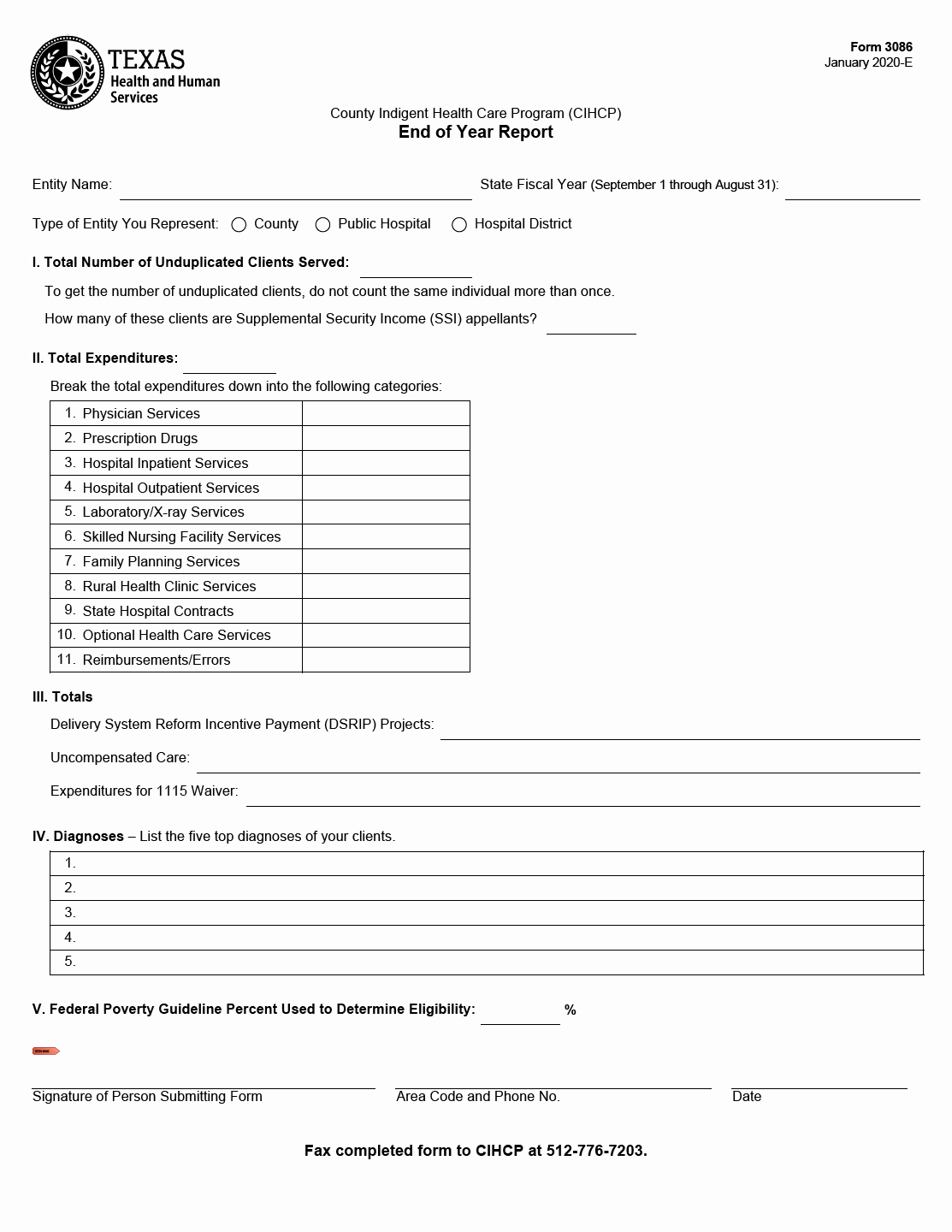
Form 3086 is the official End of Year Report used by entities participating in the Texas County Indigent Health Care Program (CIHCP). This document provides a standardized way for counties, public hospitals, and hospital districts to report annual data on clients served, expenditures, diagnoses, and program eligibility criteria. The form covers the state fiscal year from September 1 through August 31 and is essential for compliance, funding tracking, and statewide program evaluation.
Purpose of Form 3086
The primary purpose of the CIHCP End of Year Report is to summarize how local health care entities delivered indigent care during the fiscal year. It documents the total number of individuals served, financial expenditures across specific service categories, and key health-related data. This information helps the state monitor program performance, assess resource allocation, and maintain accountability within the indigent health care system.
Who Uses This Form
The form is intended for:
- County governments administering indigent health care programs
- Public hospitals participating in CIHCP
- Hospital districts providing services to indigent clients
These entities must submit detailed annual records to ensure proper reporting and compliance with state indigent care requirements.
Key Sections of Form 3086
I. Total Number of Unduplicated Clients Served
This section captures the total number of individuals who received services during the fiscal year. Only unique clients are counted, meaning that the same person should not be recorded more than once. The form also asks for the number of clients who are Supplemental Security Income (SSI) appellants, reflecting a specific subgroup relevant to eligibility and funding considerations.
II. Total Expenditures
Entities must provide a detailed financial breakdown of all program expenditures. The form requires reporting costs across multiple service categories to give a clear picture of how funds were used.
- Physician Services
- Prescription Drugs
- Hospital Inpatient Services
- Hospital Outpatient Services
- Laboratory/X-ray Services
- Skilled Nursing Facility Services
- Family Planning Services
- Rural Health Clinic Services
- State Hospital Contracts
- Optional Health Care Services
- Reimbursements/Errors
This detailed expenditure report helps the state analyze cost distribution and determine whether program funds were allocated appropriately.
III. Totals and Special Funding Categories
This section summarizes expenditures and tracks involvement in additional funding or reform initiatives. Entities must report totals for:
- Delivery System Reform Incentive Payment (DSRIP) Projects
- Uncompensated Care
- 1115 Waiver Expenditures
These fields provide insight into participation in federal waivers and innovative care delivery programs.
IV. Diagnoses
Entities must list the top five diagnoses among clients served during the fiscal year. This data helps identify prevalent health conditions within the indigent population and assists in shaping local and statewide public health priorities.
- Diagnosis 1
- Diagnosis 2
- Diagnosis 3
- Diagnosis 4
- Diagnosis 5
V. Federal Poverty Guideline Percent
This section records the percentage of the Federal Poverty Guidelines (FPG) used to determine client eligibility. The FPG level selected by the entity affects who qualifies for CIHCP services and helps standardize the eligibility determination process across the state.
The form also requires basic contact information, including area code and phone number, and must be faxed to CIHCP at the number provided.
Form Details
- Form Name: County Indigent Health Care Program – End of Year Report
- Form Number: 3086
- Region/Authority: Texas CIHCP
- Edition Date: January 2020-E