
TX HHS Form H1826. Case Information Release
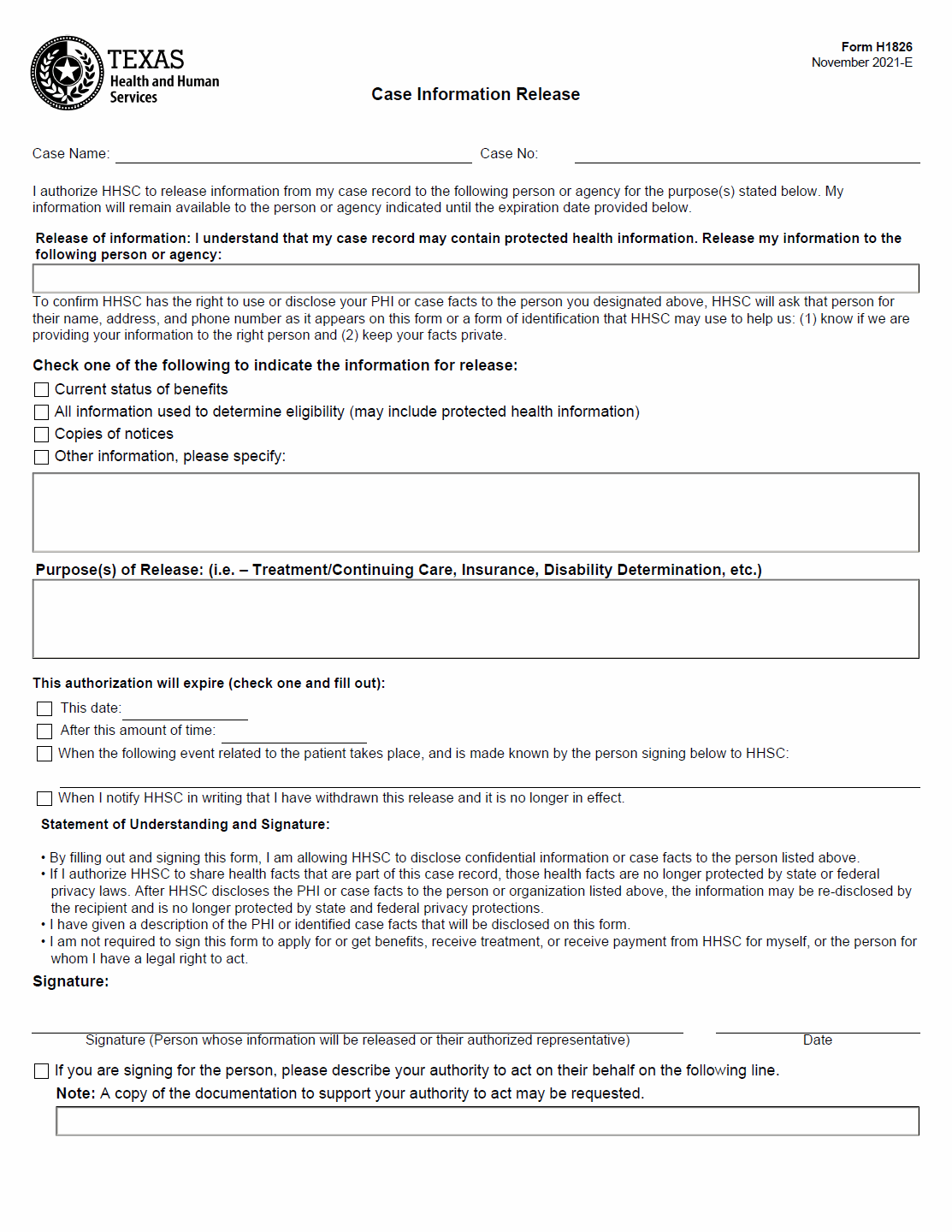
Form H1826 is a document used in Texas when an individual wants to authorize the Health and Human Services Commission (HHSC) to share information from their case record with another person or organization. This form is often needed when someone is applying for public benefits, coordinating medical care, or allowing a trusted person to assist with an active HHSC case.
The form may appear short, but it carries important legal effects: once HHSC releases the information, it may no longer be protected under state and federal privacy laws. Because of that, understanding the purpose and structure of this form is essential before signing it.
Purpose of Form H1826
Form H1826 gives HHSC permission to disclose case details, including potentially protected health information (PHI). People typically use this authorization when they need a third party—such as a caregiver, attorney, hospital, or insurance representative—to access their case status or documents.
Under Texas administrative rules and federal privacy regulations (such as HIPAA, when PHI is involved), HHSC must have written consent before sharing confidential case information with anyone not legally entitled to it. Form H1826 is the approved method to provide this consent.
Who Can Complete This Form
- The person whose case information will be released.
- A legal representative (e.g., guardian, agent under power of attorney, parent of a minor).
- Someone authorized by court order.
If a representative signs, HHSC may request documentation proving that person’s authority.
When You Need Form H1826
- When someone else is helping you manage an HHSC case (SNAP, Medicaid, TANF, etc.).
- When a hospital or clinic needs information to coordinate treatment or continuing care.
- When an attorney or advocate requires access to case documents.
- When insurance companies request verification for claims or disability determinations.
You do not need this form if HHSC is sharing information with agencies legally allowed to receive it without consent, such as certain state or federal programs for eligibility verification.
Common Real-Life Situations
- An elderly person wants their adult daughter to help check eligibility decisions and manage paperwork.
- A parent authorizes a school district to receive Medicaid-related information for special education services.
- A person receiving disability evaluations allows HHSC to send case information to a medical examiner or insurance provider.
- A hospitalized client designates a social worker to obtain Medicaid status updates.
Explanation of Key Sections
1. Person or Agency Receiving Information
You must clearly identify the person or organization allowed to receive information. HHSC will verify their identity using the name, address, and phone number you provide. If the information doesn't match, HHSC may refuse to release your details for security reasons.
2. Type of Information for Release
- Current status of benefits — allows the recipient to know whether benefits are active, denied, or pending.
- All information used to determine eligibility — this is a broad release and may include protected health information, income details, immigration status, household composition, and notices.
- Copies of notices — provides access to letters HHSC sent to you.
- Other information — a specific description of what you want released.
Choosing “all information” gives the recipient wide access. Clients sometimes check this option without understanding its scope—one of the most common mistakes.
3. Purpose of Release
This describes why HHSC is sharing information. Examples include treatment, continuing care, insurance review, or disability determination. A precise purpose helps ensure HHSC releases only what is relevant.
4. Expiration of Authorization
You may choose one of the following:
- A specific date
- A period of time (e.g., “6 months”)
- An event (e.g., “completion of insurance review”)
- Until you withdraw consent
If you choose to withdraw your authorization, it must be in writing.
5. Statement of Understanding and Signature
This section confirms that you understand the legal consequences of releasing your information. It also clarifies that HHSC cannot control what happens to the information after it has been shared.
If a person cannot physically sign, they may make a mark (X) witnessed by one or two people.
Typical Mistakes Applicants Make
- Failing to specify a clear expiration date or event.
- Checking “all information” without realizing that sensitive health details may be included.
- Leaving the purpose of release blank or vague.
- Listing a person but forgetting their address or phone number.
- Submitting the form without proper representative documentation (when required).
Practical Tips for Filling Out Form H1826
- Provide complete contact details for the person or agency receiving your information.
- If you only want specific documents shared, describe them clearly.
- Choose a reasonable expiration date that matches the situation.
- Keep a copy of the signed form for your records.
- If you change your mind, submit a written withdrawal immediately.
Documents You May Need to Attach
- Power of attorney papers
- Guardianship orders
- Medical or insurance request letters
- Case numbers or notices if referencing a specific event
FAQ
- Can HHSC release my information without this form?
Generally no. They need written authorization unless the law allows disclosure. - Can I limit what information HHSC releases?
Yes, you can specify only the documents or details you want shared. - How do I cancel my authorization?
Send a written withdrawal to HHSC. They cannot reverse releases already completed. - Does this form affect my benefits?
No. Signing or refusing to sign does not impact eligibility. - Who can I name as the authorized person?
Anyone you trust: a family member, advocate, attorney, caregiver, or organization. - How long is the authorization valid?
Until the date, time period, or event you choose—or until you withdraw it.
Micro-FAQ (Short Answers)
- Purpose? Allows HHSC to release your case information to another person or agency.
- Who files? The client or their legal representative.
- Deadline? None; used as needed.
- Attachments? Proof of representative authority if applicable.
- Submit to? Your local HHSC office or the office handling your case.
- Can it be revoked? Yes, in writing.
- Does it include health info? If you authorize release of eligibility documents, it may.
- Is it required? Only if you want HHSC to share your information with someone.
Related Forms
- Texas Form H1010 — Application for Benefits
- Texas Form H1824 — Appointment of an Authorized Representative
- Texas Medicaid Medical Release Forms
- Other HHSC Case Management Forms
Form Details
- Form Name: Case Information Release
- Form Number: H1826
- Agency: Texas Health and Human Services Commission (HHSC)
- Region: Texas
- Edition Date: November 2021