
TX HHS Form 8619. State Long-Term Care Ombudsman Program Case Record
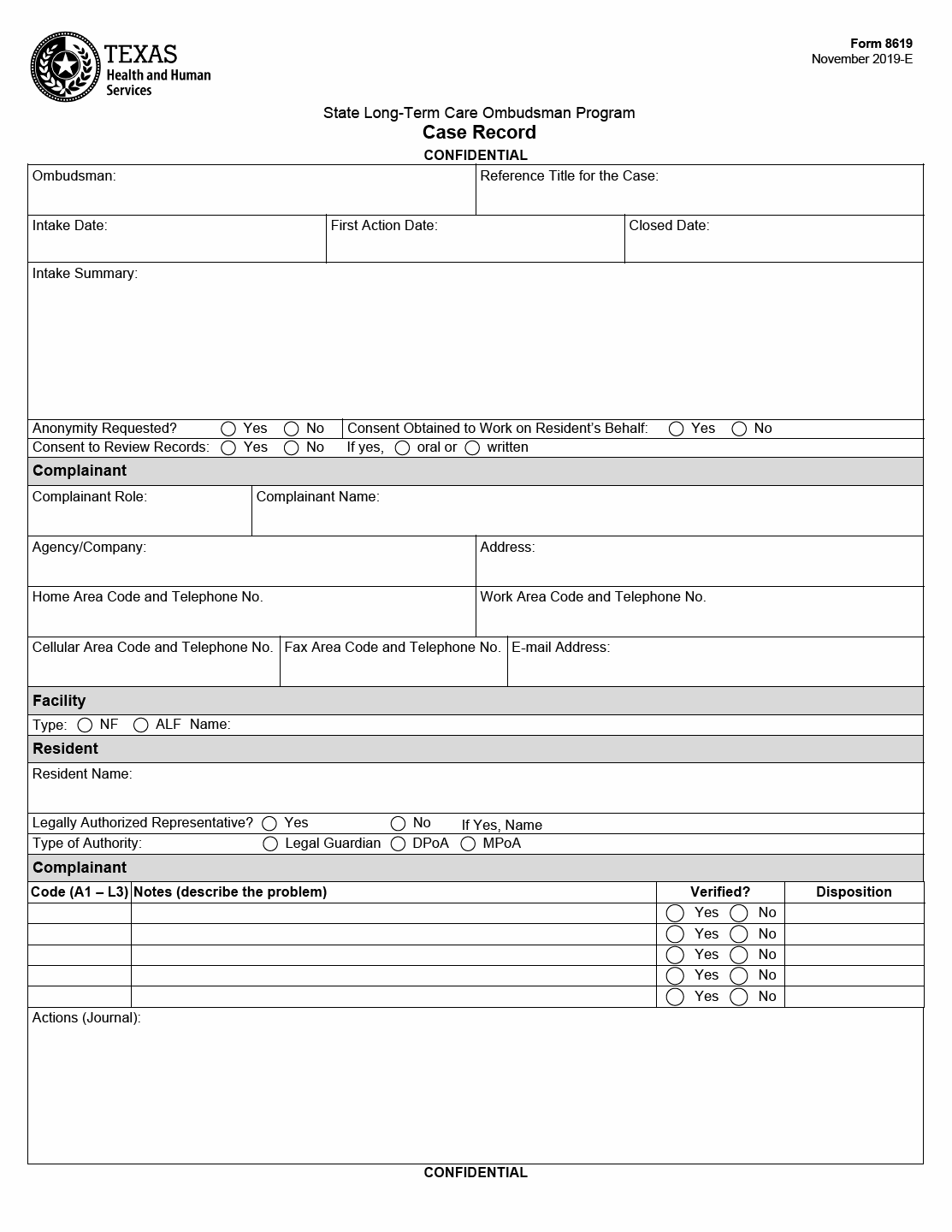
Form 8619 is a confidential case record used within the State Long-Term Care Ombudsman Program. It serves as the official internal document for recording, tracking, and resolving complaints related to long-term care facilities, including nursing facilities and assisted living facilities. The form documents the lifecycle of an ombudsman case, from intake through investigation and final disposition.
This form is not a public-facing application. It is used by certified ombudsmen to ensure that complaints are handled consistently, ethically, and in compliance with state and federal requirements governing resident advocacy and confidentiality.
Purpose and When This Form Is Used
Form 8619 is completed whenever an ombudsman receives a concern, complaint, or request for assistance related to a resident of a long-term care facility. Its primary purpose is to create an accurate, confidential record that supports advocacy on behalf of residents while protecting their identity and rights.
The form must be used when an ombudsman takes action on a case. It is not required for informal conversations that do not result in case activity, and it should not be used for general administrative notes unrelated to resident advocacy.
Who Completes Form 8619
Form 8619 may only be completed by authorized representatives of the Long-Term Care Ombudsman Program, including:
- Certified local or state long-term care ombudsmen
- Designated program staff acting under ombudsman authority
Residents, family members, and facility staff do not complete this form themselves. Their role is limited to providing information or consent that the ombudsman documents in the case record.
Explanation of Key Sections
Case Identification and Dates
This section records the ombudsman’s name, reference title for the case, intake date, first action date, and closed date. These fields establish the official timeline of the case and are essential for program reporting and oversight.
Intake Summary
The intake summary provides a brief narrative describing the initial concern or complaint. It should be factual, concise, and neutral, avoiding assumptions or conclusions before verification.
Anonymity and Consent
This section documents whether anonymity was requested, whether consent was obtained to act on the resident’s behalf, and whether permission was granted to review records. If consent was obtained orally or in writing, this must be clearly indicated.
Complainant Information
Records details about the individual raising the concern, including their role, contact information, and relationship to the resident. Accurate classification of the complainant role is important for reporting and follow-up.
Facility Information
Identifies the type of facility involved, such as a nursing facility or assisted living facility, along with the facility name. This ensures the case is associated with the correct provider.
Resident and Legal Representative Details
Includes the resident’s name and whether they have a legally authorized representative. If applicable, the type of authority, such as legal guardian, durable power of attorney, or power of attorney, must be specified.
Complaint Notes and Verification
This area is used to describe the problem, document whether the complaint was verified, and record the disposition. Clear, objective language is critical, as these notes may be reviewed for compliance or program evaluation.
Actions and Journal
The actions section serves as a chronological journal of steps taken by the ombudsman, including contacts, observations, and outcomes. This creates a defensible record of advocacy efforts.
Legal and Regulatory Context
The use of Form 8619 is governed by federal and state laws establishing the Long-Term Care Ombudsman Program, including requirements for confidentiality, resident consent, and independent advocacy. Maintaining accurate case records is mandatory to demonstrate compliance with program standards and to protect residents’ rights.
Improper handling or disclosure of information recorded on this form can lead to violations of confidentiality obligations and may expose the program or individual staff to administrative consequences.
Practical Tips for Completing the Form
- Record facts objectively and avoid personal opinions.
- Confirm and document consent before taking action on behalf of a resident.
- Be consistent with dates to ensure a clear case timeline.
- Use the actions journal to document every meaningful step taken.
- Protect the form as a confidential record at all times.
Common Mistakes to Avoid
- Failing to document consent or anonymity requests.
- Using vague or emotionally charged language in notes.
- Leaving key dates incomplete or inconsistent.
- Recording identifiable information without proper authorization.
Real-Life Situations Where This Form Is Used
- A family member reports concerns about a resident’s care in a nursing facility, and the ombudsman opens a formal case.
- A resident requests assistance but asks to remain anonymous while the issue is investigated.
- An ombudsman reviews facility records after obtaining written consent from the resident’s legal guardian.
Documents Commonly Associated with This Form
- Written consent or authorization forms
- Facility policies or incident reports
- Relevant medical or care records, if consent is granted
Frequently Asked Questions
Is Form 8619 a public complaint form?
No. It is an internal, confidential case record used only by the Long-Term Care Ombudsman Program.
Can a resident fill out this form themselves?
No. The form is completed by an authorized ombudsman based on information provided by the resident or complainant.
Is consent always required?
Yes, consent is generally required before acting on a resident’s behalf or reviewing records, unless specific exceptions apply.
What happens if anonymity is requested?
The ombudsman must protect the complainant’s identity while still documenting the case accurately.
How long should case records be kept?
Retention periods are determined by state program policies and applicable records management rules.
Micro-FAQ
- Purpose: To document and manage ombudsman advocacy cases.
- Who files: Authorized long-term care ombudsmen.
- Public access: No, the form is confidential.
- Consent required: Yes, in most cases.
- Used for: Nursing facilities and assisted living facilities.
Related Forms
- Long-Term Care Ombudsman Consent Forms
- Resident Authorization to Release Records
- Facility Complaint Intake Worksheets
Form Details
Form Name: State Long-Term Care Ombudsman Program Case Record
Form Number: 8619
Region: State Long-Term Care Ombudsman Program
Revision Date: November 2019