
TX HHS Form 2110. Community Care Intake
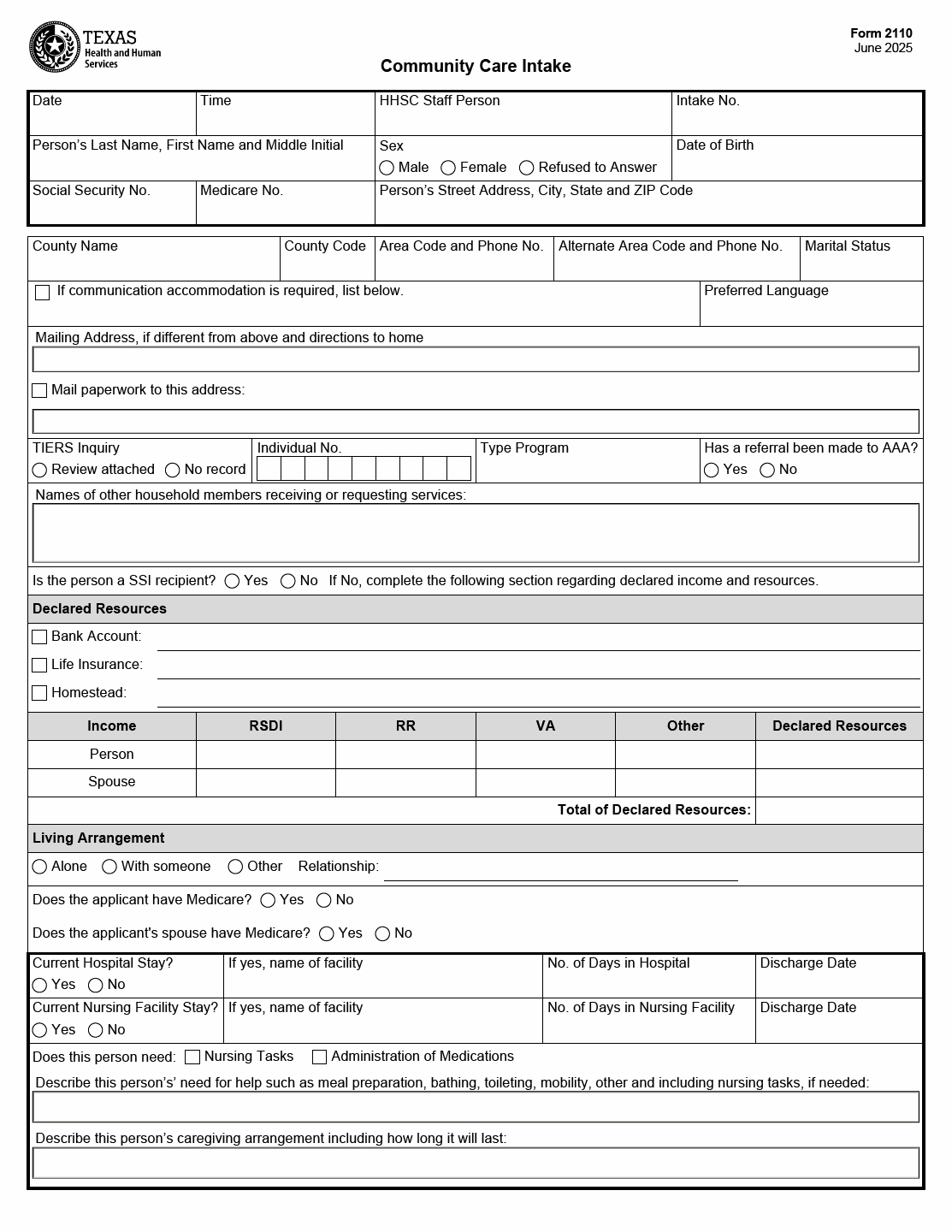
Form 2110 is the official intake document used by Texas Health and Human Services Commission (HHSC) staff to begin the evaluation process for community care and long-term services. It captures essential personal, financial, medical, and functional information needed to determine eligibility, priority level, and appropriate referrals for community-based assistance.
Purpose of Form 2110
The primary purpose of Form 2110 is to document an initial request for community care services and to create a formal intake record within HHSC systems. The form allows HHSC to assess immediate needs, screen for eligibility, identify potential risks, and determine whether referrals to other programs—such as the Area Agency on Aging (AAA)—are required.
This intake does not approve services by itself, but it is a required first step before eligibility determinations, assessments, or service planning can occur.
When This Form Must Be Used
Form 2110 must be completed whenever an individual, caregiver, or representative contacts HHSC to request community care or long-term support services. Common situations include:
- An older adult requesting help with daily living tasks at home
- A hospital or nursing facility discharge requiring community-based support
- A caregiver seeking assistance for a spouse or family member
- An individual applying for services tied to income or functional need
The form is not required for informal information-only inquiries where no intake or service screening is initiated.
Who Is Authorized to Complete the Form
Form 2110 is completed by HHSC staff during the intake process. Information may be provided by:
- The applicant
- A spouse or household member
- A caregiver or responsible party
- A hospital, facility, or community referral source
The person providing information does not need to be the applicant, but HHSC records the relationship and contact details.
Explanation of Key Sections
Identifying and Contact Information
This section records the person’s name, date of birth, sex, Social Security and Medicare numbers, address, county, phone numbers, marital status, preferred language, and any communication accommodations. Accuracy here is essential for matching records and ensuring proper follow-up.
Program and Referral Screening
HHSC staff document program type, existing records, TIERS inquiry results, and whether referrals—such as to the Area Agency on Aging—have been made.
Household and Financial Snapshot
This section captures SSI status, declared income, and resources such as bank accounts, life insurance, and homestead information. These details support preliminary eligibility screening.
Living Arrangement and Insurance
HHSC documents whether the person lives alone or with others, their relationship to household members, and Medicare coverage for the applicant and spouse.
Current Facility or Hospital Stay
This section identifies recent or current hospital or nursing facility stays, which can affect urgency, discharge planning, and service prioritization.
Functional Needs and Caregiving
Here, staff record the person’s need for assistance with activities such as bathing, meal preparation, mobility, medication administration, and nursing tasks, as well as current caregiving arrangements.
Priority and Cognitive Screening
HHSC assigns an intake priority (immediate, expedited, or routine) and documents observed memory concerns, intellectual or developmental disabilities, and caregiver involvement.
HHSC Administrative Use
This internal section tracks assignment, application mailing, referrals, interest list actions, and comments for case processing.
Practical Tips for a Smooth Intake
- Have identification, insurance, and contact information available before the intake call.
- Be clear and honest about functional limitations and care needs.
- Provide accurate income and resource estimates.
- Inform HHSC of recent hospital or facility stays.
- Identify a reliable contact person if the applicant cannot communicate easily.
Common Mistakes to Avoid
- Providing incomplete contact or address information
- Underreporting income or resources
- Failing to mention recent hospitalizations
- Unclear descriptions of care needs
- Assuming intake equals service approval
Legal and Program Context
Form 2110 is required under Texas HHSC intake and eligibility screening procedures for community care and long-term services. State rules require HHSC to document requests for services, assess risk, and prioritize individuals based on need, safety, and available resources.
Information recorded on this form becomes part of the official case record and may be used to support eligibility determinations and referrals.
Real-Life Examples of Use
- An older adult calls HHSC after a fall and requests help at home.
- A hospital social worker initiates intake prior to discharge.
- A spouse seeks assistance managing medications and daily care.
- A caregiver reports increasing memory problems and safety concerns.
Documents Commonly Needed During Intake
- Identification and Social Security number
- Medicare or insurance information
- Income and resource details
- Hospital or facility discharge information
- Caregiver contact information
Frequently Asked Questions
Does Form 2110 approve services?
No, it starts the intake and screening process only.
Who completes the form?
HHSC staff complete it based on information provided.
Can someone else call on the applicant’s behalf?
Yes, caregivers or representatives may provide information.
Is income verified at intake?
Income is screened initially and verified later if needed.
What determines intake priority?
Urgency, safety risks, and functional needs.
Is an AAA referral automatic?
No, it depends on eligibility and program criteria.
Related Forms
- Community Care Eligibility Applications
- Interest List Forms
- AAA Referral Documentation
- Functional Assessment Forms
Form Details
- Form Name: Community Care Intake
- Form Number: 2110
- Issued By: Texas Health and Human Services Commission
- State: Texas
- Revision Date: June 2025